






Mammals
Birds
Animalscapes

Natural Art

Collections

Latest
Availability: Undetermined - Enquiries?







In the Field
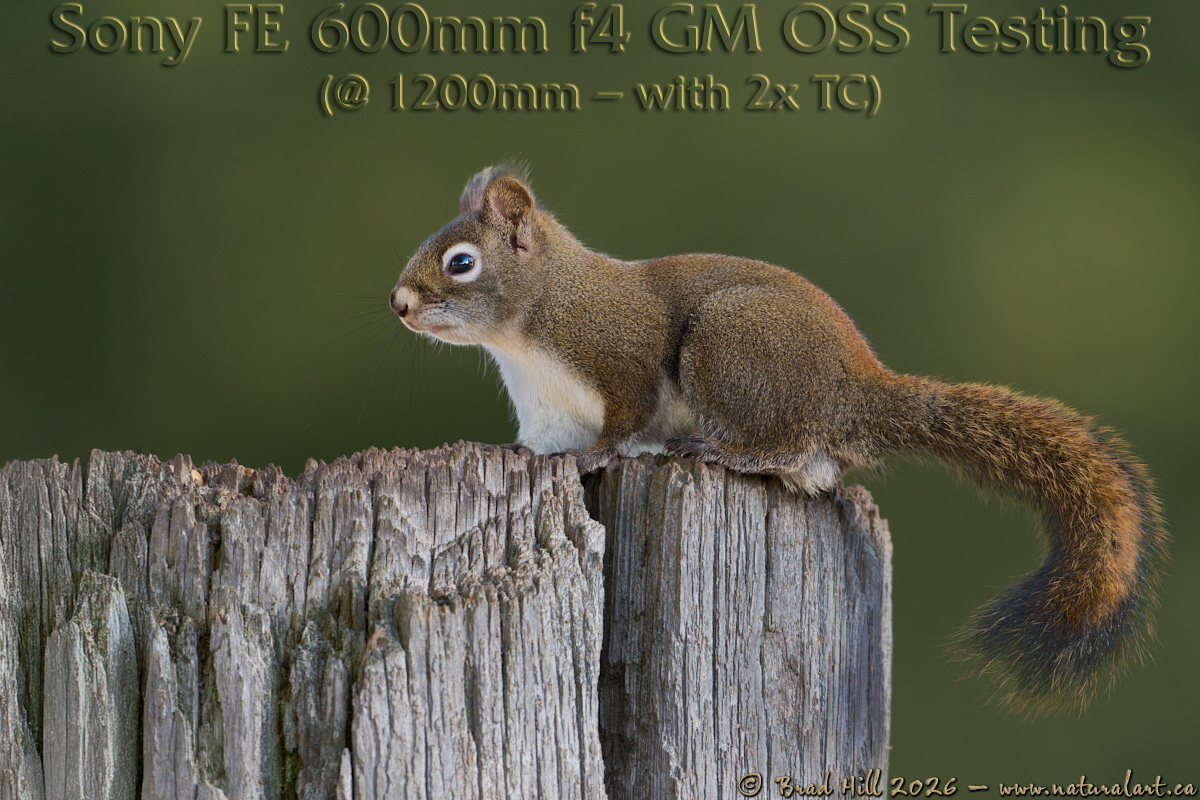
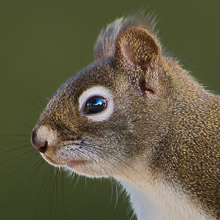
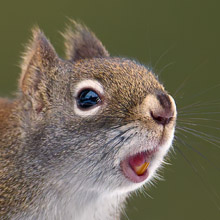
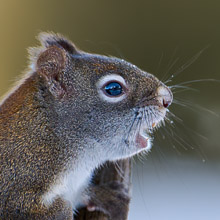
Red @ 1200mm. Findlay Creek, British Columbia, Canada. February 1, 2026.
Each winter I go into "training" to hone my skills as a wildlife photographer. This training can take a lot of different forms, from practicing general camera handling (such as skills like putting on a teleconverter as fast as possible) through to working on my post-processing skills. I also use it to thoroughly test a wide range of lenses over a variety of conditions so I'll know exactly what they can do (and can't do) when I'm shooting more seriously in the spring, summer, and autumn.
During the winter of 2025/2026 I decided to "broaden my language skills" through learning to speak another camera language beyond just Nikon. The new language I decided to learn was fairly similar to Nikon (probably more of a dialect actually) - it's called "Sony". Why did I do this? Partly because there were some lenses in the Sony E-mount that intrigued me and that weren't available in the Nikon Z-mount, and partly because I knew if I became fluent in Sony-speak I could be of more assistance to my guests on photo tours who shoot with Sony equipment.
I decided that the BEST way for me to learn Sony-speak was to get my hands on a bunch of Sony gear (both cameras and lenses) and test the heck out of them! One of the many things I was curious about was if the Sony teleconverters worked as well on their mirrorless cameras and lenses as their Nikon counterparts do. Like many Nikon shooters, I had already discovered that the Nikon teleconverters (both the 1.4x and the 2.0x) worked significantly better on their mirrorless cameras and Z-mount lenses than they did on their DSLR's and F-mount lenses. I wondered if the same was true with Sony.
Before actually testing the Sony TC's for myself I consulted the infinite wisdom of Google AI to see what it "thought" of the Sony TC's (and how they compared to the Nikon Z teleconverters). It had a lot to say, but the gist of it was that it "thought" (and I use that term really loosely here) the Nikon teleconverters were slightly better optically but the Sony TC's had the advantage of being smaller. Hmmm...to me that felt like a simple regurgitation/summary of comments on the internet, with no recognition or weighting of the quality of the information. So, not surprisingly, I decided I had no choice but to test the TC's myself (if you want something done right...).
What did I learn during my OWN testing of the Sony TC's (and I focused primarily on their performance with the Sony FE 300mm f2.8 GM OSS and the Sony 600mm f4 GM OSS)? Well...I agree with Google AI's wisdom that the Sony TC's ARE smaller. But optically? Holy smokes, both the 1.4x and the 2.0x Sony TC's performed INCREDIBLY well optically with both the Sony 300mm f2.8 and the Sony 600mm f4. I won't say they were BETTER than the Nikon Z-teleconverters (largely because I didn't have identical Nikon lenses to compare to at the time of testing), but it's hard to imagine the Nikon TC's doing better!
As an example, the image shown above was captured using the Sony 600mm f4 paired with the Sony 2x TC (so at 1200mm). If you have the time download the 4800 pixel version of this image linked below and check it out.
Bottom line? If I have sufficient light to work with, I won't hesitate AT ALL to shoot either of the Sony TC's with their 300mm f2.8 or 600mm f4 super-telephoto lenses. Teleconverters (from BOTH Nikon and Sony) have now finally hit the big time - and are absolutely acceptable for professional use.
Here's a larger version (4800 pixel) of this handsome little devil for your perusal:
• Red @ 1200mm: Download 4800 pixel image (JPEG: 5.4 MB)
ADDITIONAL NOTES:
1. These images - in all resolutions - are protected by copyright. I'm fine with personal uses of them (including use as desktop backgrounds or screensavers on your own computer), but unauthorized commercial use of the image is prohibited by law. Thanks in advance for respecting my copyright!
2. Like all photographs on this website, these images were captured following the strict ethical guidelines described in The Wildlife FIRST! Principles of Photographer Conduct. As such, no baiting or any form of attractant was used and, as always, we attempted to minimize our impact on the ongoing behaviour of the subjects. I strongly encourage all wildlife photographers to always put the welfare of their subjects above the value of their photographs.
Behind the Camera
Red @ 1200mm. Findlay Creek, British Columbia, Canada. February 1, 2026.
Compressed RAW (ARW) format; ISO 2000.
Sony A1 II paired with Sony EF 600mm f4 GM OSS lens with Sony 2x TC (1200mm). Tripod mounted. OSS on and set to Mode 3. Expand Spot (Tracking) AF area mode with subject detection mode set to Animal/Bird.
1/800s @ f9; -1.0 stop compensation from multi-metered exposure setting.
At the Computer
Red @ 1200mm. Findlay Creek, British Columbia, Canada. February 1, 2026.
Initial noise reduction and capture sharpening on the .arw (raw) file using the DeepPRIME XD2S algorithm of DXO PhotoLab 9.3 Elite (using the appropriate camera/lens module).
Subsequent adjustments to the adjusted linear DNG file (exported from PhotoLab) and conversion to 16-bit TIFF file (and JPEG files for web use) - including all global and selective adjustments - made using Capture One Pro (build 16.7). In the case of this image only one global adjustment was made - a minor tweak to the highlights. Selective local adjustments performed using Capture One Pro's layers and masking tools. In this case numerous small adjustments and minor tweaks were made on 5 separate layers, with the tweaks being associated with "exposure balancing" and contrast adjustments (such as adjustments to brightness, clarity, highlights, shadows, blacks, etc.).
Photoshop modifications included insertion of the watermark and/or text.
Conservation
Red @ 1200mm. Findlay Creek, British Columbia, Canada. February 1, 2026.
IUCN Conservation Status*: Species of Least Concern.
The Red Squirrel (Tamiasciurus hudsonicus) is a medium-sized squirrel that occupies year-round exclusive territories from which they will aggressively repel intruding squirrels. They are widely distributed across much of North America almost everywhere conifers (and the cones the squirrels feed on) are found, except on portions of the west coast where they are replaced by Douglas Squirrels (AKA "Chickarees").
Red Squirrels have adapted well to the presence of humans and have the IUCN conservation status of a species of Least Concern. In many urban areas in North America the Eastern Gray Squirrel (Sciurus carolinensis) have been introduced and ecologically replaced Red Squirrels. In North America this hasn't seemed to impact much on rural Red Squirrel populations, but in Britain the introduction of the Eastern Gray has had a major impact on the native Red Squirrel (Sciurus vulgaris), with the invasive grays replacing the native reds over much of their historical range.
*as determined by the IUCN: The Internation Union for Conservation of Nature - see www.iucnredlist.org