






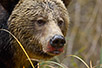
Bears
Marine Mammals
Wolves & Kin
Hooves & Horns
Other
Availability: Undetermined - Enquiries?







In the Field
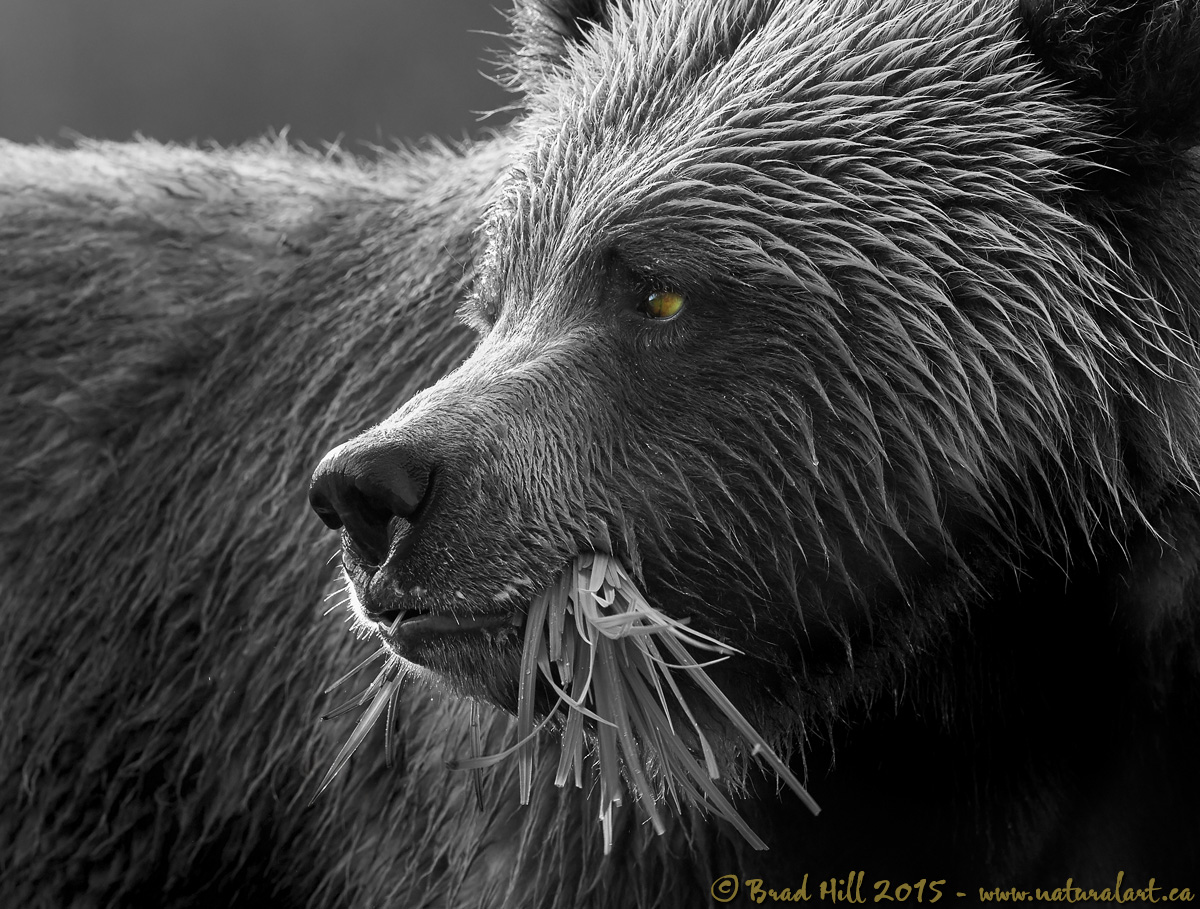
Focus. Khutzeymateen Grizzly Sanctuary, northern BC coast, Canada. May 31, 2012.
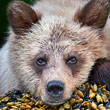
I shot this tight, intimate portrait of a foraging grizzly a few years ago while visiting the Khutzeymateen Grizzly Sanctuary. My primary motivation in shooting it was to juxtapose the almost fearsome reputation of grizzlies with their much more gentle true nature. The keen observer will notice that the material hanging out of the bear's mouth is grass - not tripod parts and not the fingers of an overzealous photographer! The bears in the Khutzeymateen - including this bear - are completely wild, but because its been years since these bears have been harassed or mis-managed by humans, they tend to be quite tolerant of small groups of humans that know to stay in places that don't threaten the bears. And, at times, while the bears are going about their normal activities, their chosen route brings them quite close to the Zodiacs that contain guests to the sanctuary. Which is exactly what happened here. And when this does happen, the key to minimizing disturbance on the bears is for everyone in the Zodiac to move as slowly and gently as possible - which usually translates into NOT fiddling with cameras - so you don't change lenses or cameras and you just shoot with WHATEVER you have in your hands. In this case I had my favorite wildlife lens in my hands - my 400mm f2.8 VR. Ergo - tight portrait!
This shot sat in raw form until February 2015. Then, when looking through my collection for some shots for a specific project, I decided to process this one. As soon as I finished the colour master file, I knew I HAD to try a B&W conversion on this one. My taste in B&W photos is quite straight-forward - I like them tonally simple, yet with some true blacks, some true whites, and with a nice but discrete range of grays in between. In other words - simple but with contrast. Interestingly, this tends to mean that images I like in colour are the same ones I like in B&W. I can't recall a time when I decided to try a B&W conversion because the image "didn't work" in colour...
What about the full colour eye? Tacky? Cliche? Perhaps. THAT aspect of the shot is little more than an experiment on my part and I kind of like it. It clearly draws attention to the eye region almost instantly, and I THINK after that most viewers will explore the rich detail of the head region (possibly more slowly than if the eye was in B&W). For those who are on the fence - full B&W versions (with no retention of colour in the eye) and full colour versions are available for comparison below...
Here's three versions (as above, full B&W, and full colour) of the image in a higher res format (for those wanting to compare the image styles):
• Focus - with colour eye: Download 2400 pixel image (JPEG: 1.9 MB)
• Focus - full B&W: Download 2400 pixel image (JPEG: 1.8 MB)
• Focus - full colour: Download 2400 pixel image (JPEG: 2.1 MB)
NOTES:
1. These images - in all resolutions - are protected by copyright. I'm fine with personal uses of them (including use as desktop backgrounds or screensavers on your own computer), but unauthorized commercial use of the image is prohibited by law. Thanks in advance for respecting my copyright!
2. Like all wildlife images on this website, the subject is fully wild and completely unconstrained. Besides the potential impact of my presence, nothing has been done to intentionally alter or affect the ongoing behavior of the subject and, of course, there has been no use of any form of bait or other form of wildlife attractants (including vocalizations).
3. This image was captured during one of my two spring "Grizzlies of the Khutzeymateen" photo tours in May/June of 2012. Each year I offer trips into two different parts of the Great Bear Rainforest as well as one to photograph aquatic mammals and oceanscapes near the northern tip of Vancouver Island. And, in selected years, I also offer photo tours to locations to capture other highly sought-after subjects, such as various boreal owl species and wildlife of Canada's Arctic. Details about these trips can be found on the Photo Tours page of this website.
Behind the Camera
Focus. Khutzeymateen Grizzly Sanctuary, northern BC coast, Canada. May 31, 2012.
Digital Capture; Compressed RAW (NEF) 14-bit format; ISO 2000.
Nikon D4 paired with Nikkor AF-S 400mm f2.8G VR - hand-held from floating Zodiac inflatable boat. VR on in Normal mode.
1/400s @ f11; -0.33 stop compensation from "recommended" matrix-metered exposure setting
At the Computer
Focus. Khutzeymateen Grizzly Sanctuary, northern BC coast, Canada. May 31, 2012.
RAW Conversion to 16-bit TIFF Phase One's Capture One Pro 8. Four raw variants (different versions of a single raw capture) processed, differing by a total of 2.25 stops in exposure. Variation between variants also included differences to shadow and highlight retrieval settings.
Further digital corrections on resulting 16-bit TIFF files using Adobe's Photoshop CC 2014 and Light Crafts Lightzone. Photoshop adjustments included compositing (blending) of the four output files from the raw converter, minor exposure tweaks, conversion to B&W (using B&W Adjustment Layer), and selective sharpening for web output. Final tone-tweaking performed using LightZone's "tonemapper" tool.
Conservation
Focus. Khutzeymateen Grizzly Sanctuary, northern BC coast, Canada. May 31, 2012.
Ten percent of the revenue generated by this image will be donated to Raincoast*.
Species Status in Canada**: Special Concern (May 2002).
While Grizzly Bears (Ursus arctos) are not technically listed as "Endangered" in Canada, they have been extirpated from most of their historical range. Grizzly Bears are far more sensitive to intrusion/disturbance in their habitat than are Black Bears and are being increasingly forced into marginal habitat by human encroachment. The Great Bear Rainforest along the central and northern coast of British Columbia is one of the last strongholds of the Grizzly Bear in Canada, and even this population is coming under increasing pressure.
On December 18, 2017 the government of British Columbia banned grizzly hunting across the entire province. This major conservation victory came after decades of tireless work by many dedicated conservationists and ecologists and, most importantly, it reflects the opinion of the vast majority of British Columbians. And, it means that AT LEAST while the current government remains in power grizzlies are finally "safe" in British Columbia.
Now that we've at least temporarily won the battle to save grizzlies in BC, it's time to re-focus our efforts toward protecting ALL of BC's carnivores, including Gray Wolves, Black Bears, Cougars, Wolverines, and more! Simply put, there are no ecological, economic, or ethical arguments supporting the trophy hunting of carnivores.
In a great first step towards ending the hunting of carnivores throughout BC the Raincoast Conservation Foundation has developed a program designed to protect ALL carnivores within the Great Bear Rainforest. Details about this program can be found on this page on Raincoast's website. Check it out and, better yet, make a donation to help Raincoast purchase the remaining commercial hunting tenures in the Great Bear!
*The Raincoast Conservation Society (and Foundation) is an effective and efficient organization that has been fighting for protection of this unique habitat. If you are looking for a meaningful way to contribute to the conservation of this amazing ecosystem, Raincoast will provide maximal "bang" for your conservation dollars.
**as determined by COSEWIC: The Committee on the Status of Endangered Wildlife in Canada